Thai · Gluten free6 min read
Is Thai food gluten free?
A dish-by-dish guide to ordering gluten free at a Thai restaurant, from sticky rice and papaya salad to the noodles and stir-fries that depend on the sauce.
By the Forkiee editorial team. Reviewed by an editor before publishing. Editorial standards.
Short answer
Often, with a few questions. Thai cooking leans on rice, fish sauce and coconut milk, which are naturally gluten free, and on rice noodles, which almost always are, but most soy sauces contain gluten and oyster sauce can list wheat flour. Plain rice, green papaya salad and salt-grilled fish are the easiest orders. Ask the kitchen about every sauce, and about shared oil, before you order.
The menu at a glance
- Steamed jasmine ricePlain rice is naturally gluten free, and it is the fallback when you are unsure about everything else.
- Mango sticky riceGlutinous rice under ripe mango with coconut cream syrup. Despite the word glutinous, it is still rice, which is naturally gluten free; check that nothing else is spooned on top.
- Som tam thai (green papaya salad)Shredded papaya pounded with garlic and chilies, then dressed with fish sauce, tamarind and lime, with peanuts and dried shrimp. Ask that the dressing is just those.
- Plah plow (salt-grilled fish)Fish filled with lemongrass and lime leaves, crusted in salt and grilled. Ask what the dipping sauce is made from.
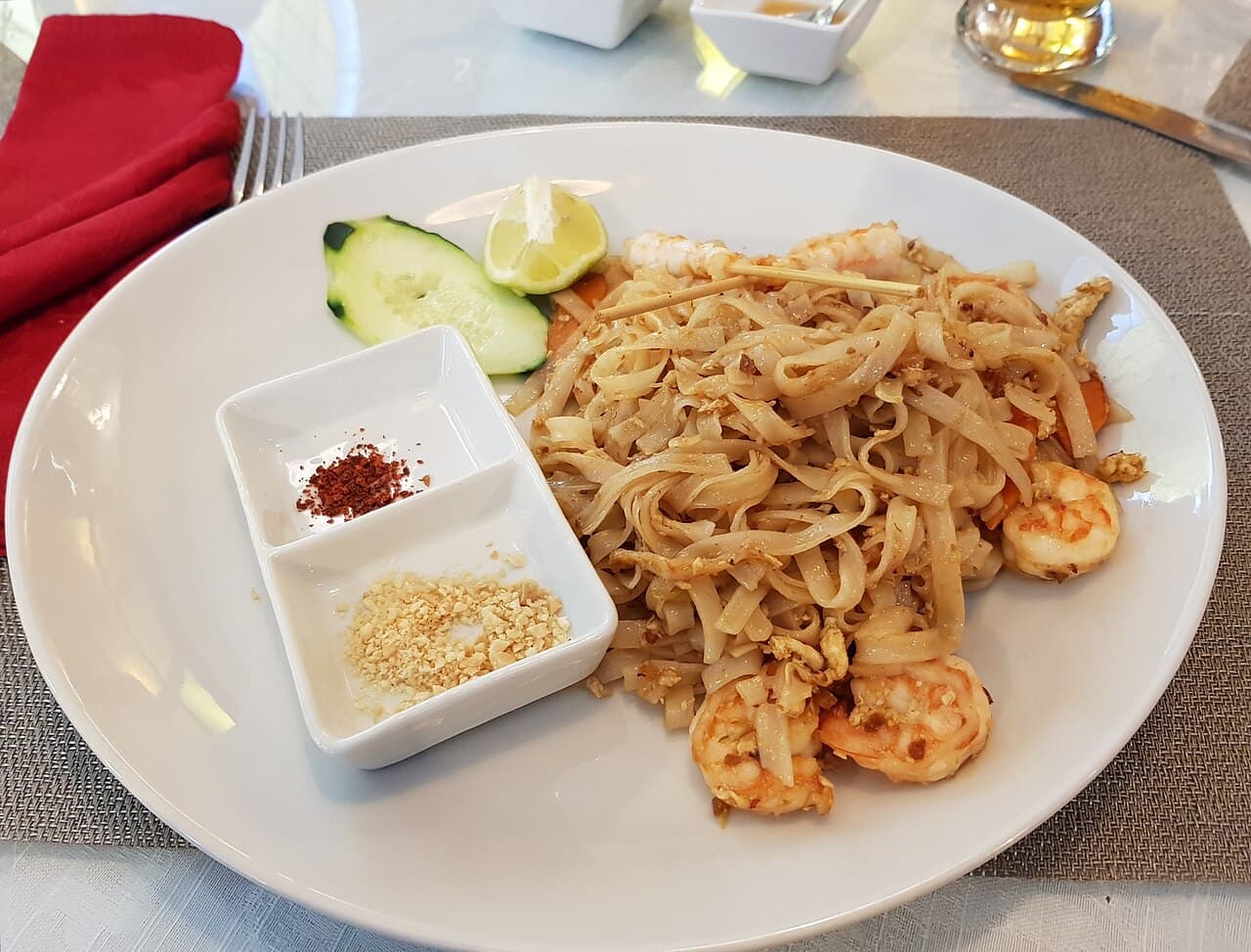
- Pad thaiRice noodles with tofu, shrimp, egg, peanuts, bean sprouts and fish sauce. Ask whether soy sauce or oyster sauce goes in, and whether the noodles are gluten free.
- Green and red curriesBuilt on curry paste with coconut milk or coconut cream. Ask which paste the kitchen uses and whether any soy sauce or oyster sauce is added.
- Tom yum goongA soup of shrimp, mushrooms, tomato, lemongrass, galangal and lime leaves. Ask whether soy sauce or oyster sauce goes into the broth.
- Pad ga pow (holy basil stir-fry)Chicken, pork or mince stir-fried with garlic, chilies, green beans and basil. Ask what sauces season it and whether tamari can replace soy sauce.
- Gai pad king (ginger chicken)Chicken, mushrooms and plenty of ginger fried with oyster sauce. Ask whether the kitchen has a gluten-free oyster sauce.
- Stir-fried morning gloryThe greens are flash-fried with garlic, chilies and oyster sauce. Ask for a gluten-free oyster sauce, or for garlic and chili alone.
- Thai omelet (kai jiew)The eggs are seasoned with fish sauce and soy sauce, then deep-fried. Ask for fish sauce only, cooked in oil nothing battered has touched.
- Fried tofu and battered startersBatter may be made with wheat flour, and shared frying oil raises the chance of cross-contact. Ask what the coating is, or order tofu steamed instead.
- Pad see ewWide rice noodles, but seasoned with dark soy sauce, and most soy sauces contain gluten.
- Egg noodle dishesEgg noodles typically contain gluten. Ask for the same dish with rice noodles.
- Kao ka moo and moo dad diewPork leg braised for hours in sweet soy sauce, and pork bites marinated in dark sweet soy before frying. Most soy sauces contain gluten.
Where gluten hides in Thai food
- Soy sauce
- Oyster sauce
- Marinades
- Egg noodles and batter
- Shared oil and woks
- Fish sauce and curry paste
Soy sauce. Most soy sauces contain gluten, and Thai kitchens use them in noodle dishes like pad see ew and in sweet soy braises. Tamari made without wheat is gluten free, so ask whether the kitchen keeps it.1,2,3
Oyster sauce. Oyster sauce seasons Thai stir-fries such as ginger chicken and morning glory. A standard oyster sauce from one large maker lists wheat flour, while the same maker sells a gluten-free one, so it comes down to the bottle in that kitchen.3,4,5
Marinades. Marinades and dressings may contain soy sauce or flour. Moo dad diew, for example, is pork marinated in dark sweet soy before it is fried.2,3
Egg noodles and batter. Egg noodles typically contain gluten, so choose rice noodles and check that they are gluten free. Batter on fried food, fried tofu included, may be made with wheat flour.1,2
Shared oil and woks. Gluten can reach a dish through shared utensils and cooking spaces, and oil shared with breaded food is one place it happens. With celiac disease, the dish has to be kept away from that contact, whatever its recipe.1,2
Fish sauce and curry paste. These are usually not where gluten hides. Fish sauce is typically fermented anchovies with salt, and a green curry paste sold to restaurant kitchens is labeled gluten free. Brands differ, so ask which ones are used.1,6,7
What to ask the waiter
- Which sauces go into this dish, and does any of them contain soy sauce or oyster sauce?
- Can the kitchen use tamari or a gluten-free oyster sauce instead?
- Are these rice noodles, and are they gluten free?
- Is anything fried in the same oil as battered food?
- Can my dish be cooked in a cleaned wok?
With celiac disease, ask about the oil and the wok every time. When the answers are vague, plain steamed rice is the careful order.
Questions people ask
What Thai meals are gluten free?
Dishes built on rice, fish sauce and coconut milk are the best starting point: plain rice, green papaya salad, salt-grilled fish and mango sticky rice. Curries and stir-fries can work too, once the kitchen confirms which sauces go in and that none of them contains soy sauce or a wheat-based oyster sauce.
How do I order gluten free at a Thai restaurant?
Pick rice noodles over egg noodles and check that they are gluten free. Ask for tamari in place of soy sauce, choose steamed or pan-seared dishes over fried ones, and ask about shared oil. A restaurant that takes changes, or has a gluten-free menu, makes this much easier.
Is pad thai usually gluten free?
Often it can be. A classic version is rice noodles stir-fried with tofu, shrimp, egg, peanuts and fish sauce. Restaurant sauces differ, so ask whether soy sauce or oyster sauce goes in and whether the rice noodles are gluten free.
Is Thai curry gluten free?
Usually the base is curry paste with coconut milk, and a green curry paste sold to restaurant kitchens is labeled gluten free. Pastes and recipes vary, so ask which paste is used and whether soy sauce or oyster sauce is added.
Keep exploring
Sources
- Gluten Intolerance Group, Exploring Thai Cuisine on a Gluten-Free Diet
- Celiac Disease Foundation, Sources of Gluten
- CNN Travel, 40 Thai foods we can't live without
- Lee Kum Kee USA, Oyster Flavored Sauce
- Lee Kum Kee USA, Gluten-Free Oyster Sauce
- McCormick For Chefs, Fish sauce
- McCormick For Chefs, Green curry paste
Good to know
This article is for information only and is not medical or dietary advice. Talk to a qualified healthcare professional before changing how you eat, especially if you live with celiac disease, a severe food allergy or another health condition.
How this page was made. Written by the Forkiee editorial team with AI assistance and checked against the sources above and the allergen and diet lists the Forkiee app uses. Recipes change from kitchen to kitchen, so ask.